Swimming and water exercise in menopause: gentle on joints, good for fitness
Water exercise builds fitness and strength while taking weight off sore joints, and it eases arthritis pain slightly. Because water supports your body, swimming does less for bone than weight-bearing exercise.
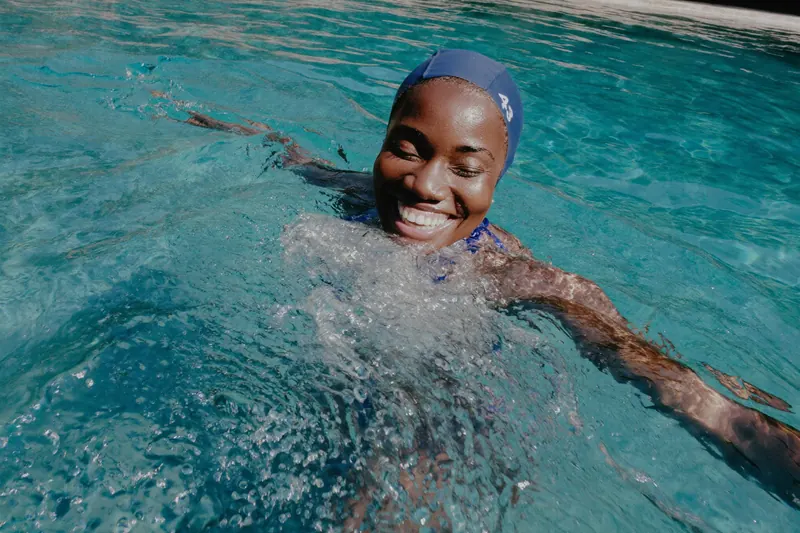
Check with a doctor before starting if you have a heart condition, high blood pressure, severe osteoporosis or kyphosis, or open wounds. Get medical advice before cold-water swimming if you have any heart problem.
Why water exercise appeals in midlife
Swimming, aqua aerobics and water walking all count as aerobic activity. Mayo Clinic lists swimming and water aerobics among good aerobic choices in menopause.7
Water supports your body weight, so movement is easier on painful knees, hips and backs. Many women who find walking or classes painful can exercise comfortably in a pool.
Even without bearing your weight, water exercise can still build heart fitness and muscle strength.4 You can work as gently or as hard as suits you.
What the research shows
Joint pain. A Cochrane review looked at 13 trials with 1,190 people with knee or hip arthritis.1 Water exercise slightly reduced pain and disability and slightly improved quality of life.1 The evidence was moderate quality, but not specific to menopause.1
Fitness and strength. A 2018 review of 15 studies in healthy postmenopausal women found water exercise improved strength, flexibility, balance and walking ability.2 Effects on body fat were unclear.2
Bone. Water exercise is not weight-bearing, because buoyancy counteracts gravity.4 One trial gave 108 postmenopausal women 24 weeks of high-intensity water exercise or no exercise.3 The inactive group lost a little bone density at one hip site, while the exercise group did not.3 This is one study at one site, so do not rely on swimming alone for bone.
Hot flashes and mood. An online survey asked 1,114 women who swim in cold water about their symptoms.5 Among those in menopause, about 30% said it eased hot flashes and about 47% said it eased anxiety.5 Surveys of people who already enjoy an activity cannot show cause and effect.5 No trials have tested swimming for hot flashes, and a Cochrane review found too little evidence that exercise in general helps them.6
How to start safely
- If you are not a confident swimmer, try water walking or an aqua aerobics class in the shallow end.
- Many pools run adult swim lessons and low-impact classes for beginners.
- Start with short, easy sessions and build up gradually, with a gentle warm-up and cool-down.9
- Drink water. You still sweat in a pool, even if you do not notice it.
- Pool floors and changing rooms can be slippery, so take care if your balance is not steady.
- If neck or shoulder pain makes swimming hard, try different strokes, a float, or water walking instead.
If you have osteoporosis, water exercise is a good choice for fitness and strength.4 It may suit you especially well if you have severe osteoporosis or a curved upper back and a high fracture risk.4 Speak to your doctor first, and add some safe weight-bearing and strength work on land if you can.4
Cold-water swimming carries real risks. Sudden cold can cause "cold shock", with a fast heart rate, raised blood pressure and gasping.10 It may also trigger abnormal heart rhythms, and cold water can lead to hypothermia.10
- Talk to a doctor first if you have a heart condition or high blood pressure, or are new to swimming.10
- Get in slowly rather than jumping or diving in, and get out gently.10
- Never swim alone. Go with a friend or an organized group.10
- Only swim when you feel well, keep sessions short, and warm up afterward. Check local advice on water quality and safety.
Do you have a heart condition, diabetes, high blood pressure or another health problem? Have you been inactive for a long time? If so, check with your doctor before you start.9 Stop and get urgent help if you have chest pain, dizziness or a racing heartbeat. The same applies to breathlessness that does not settle with rest.9
Pregnancy is still possible in perimenopause, until periods have stopped for 12 months.11 If you are or might be pregnant, ask your doctor or midwife which activities suit you.
Building a balanced week
Swimming can supply much of the aerobic activity WHO recommends: 150 to 300 minutes of moderate activity a week.8 For bone, pair it with land-based strength or impact exercise.4 See strength training for women over 40.
What it is used for: evidence rated
| Option | Evidence | What the research shows |
|---|---|---|
| Joint pain (knee and hip arthritis) | Water exercise slightly reduced pain and disability in a Cochrane review, though the trials were not in menopausal women specifically.1 | |
| Strength, balance and fitness | A review of 15 studies in postmenopausal women found better strength, flexibility, balance and walking ability.2 | |
| Bone strength | One trial found high-intensity water exercise prevented a small loss of hip bone density; swimming is not weight-bearing.3,4 | |
| Mood and anxiety | Only survey data from cold-water swimmers, who reported less anxiety and low mood.5 | |
| Hot flashes | Only self-reports from a survey of cold-water swimmers; no trials have tested this.5 |
Ratings explained: how we rate. Always talk to a doctor or pharmacist before starting a medicine or supplement.
Related
Sources
- Aquatic exercise for the treatment of knee and hip osteoarthritis, Cochrane featured review (2016)
- Head-out aquatic exercise for generally healthy postmenopausal women: a systematic review, J Phys Act Health (2018)
- Benefits of a high-intensity aquatic exercise program (HydrOS) for bone in postmenopausal women, J Bone Miner Metab (2014)
- Osteoporosis and exercise, Better Health Channel, Victoria State Government
- Cold water swimming and menopause symptoms: survey of 1,114 women in Post Reproductive Health, EurekAlert (2024)
- Exercise for vasomotor menopausal symptoms (Cochrane review 2014), Australasian Menopause Society summary
- Women's wellness: fitness tips for menopause, Mayo Clinic News Network (2019)
- Physical activity fact sheet, World Health Organization Europe
- How to get the exercise you need, CardioSmart, American College of Cardiology
- Cold water swimming: is it good for you? British Heart Foundation
- Can you get pregnant during perimenopause? University Hospitals (2025)