Yoga for menopause: what the evidence shows and how to start
Yoga seems to ease overall menopausal symptoms, mood and sleep about as well as other exercise, but it is not a proven treatment for hot flashes. It is low-impact, easy to adapt, and a gentle way to start moving.
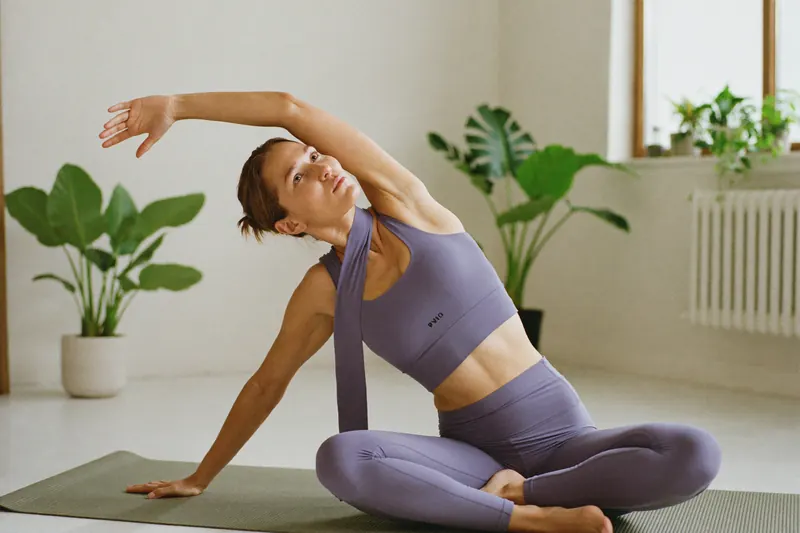
Check with a doctor or physical therapist first if you have osteoporosis, a past spinal fracture, glaucoma, pelvic floor problems or high blood pressure that is not well controlled. See a doctor about new joint, back or neck pain that does not settle.
What yoga is
Yoga combines physical postures, breathing and relaxation or meditation. Styles range from slow, gentle classes to fast, flowing ones.
Many women in their 40s and 50s like yoga because it builds flexibility, balance and calm in one session. You can start at almost any fitness level.
What the research shows
A 2018 review pooled 13 trials with 1,306 women. Compared with no treatment, yoga reduced overall menopausal symptoms, including psychological, physical and hot flash scores.1 Compared with other exercise, it only did better for hot flashes, and several trials had a high risk of bias.1
The largest single trial, run by the US MsFLASH network, gave 355 women 12 weeks of yoga classes and home practice. Yoga did not reduce how often hot flashes happened or how much they bothered women.2 It gave a small improvement in menopause-related quality of life.2
Because of these mixed results, The Menopause Society does not recommend yoga as a treatment for hot flashes.3 That does not make yoga useless. The US National Institutes of Health (NIH) says yoga appears at least as helpful as other exercise for menopause symptoms.4 It may also help with anxiety and sleep.4
A 2024 review of mind-body exercise, including yoga, in midlife women found better sleep, anxiety, mood and fatigue than usual activity.7 For long-lasting low back pain, a 2022 Cochrane review found yoga gave small improvements in pain and function compared with no exercise.5
Yoga on its own is unlikely to build bone. A review of Pilates and yoga in women found no clear difference in bone density compared with control groups.6
How to start safely
Look for a beginner, gentle or "yoga for midlife" class with a qualified teacher. Learning without supervision has been linked to a higher risk of injury.4 Tell the teacher about any joint problems, back pain or health conditions.
- Start with one or two short sessions a week and build up slowly.
- As a beginner, skip headstands, shoulder stands, the lotus position and forceful breathing.4
- Hot yoga can cause overheating and dehydration, and small rises in body temperature can trigger hot flashes.4,3 A cooler room is often more comfortable.
- Use props such as blocks, straps or a chair. Chair yoga is a good option if getting down to the floor is hard.
If you have osteoporosis, avoid deep forward bends and loaded rounding of the spine. Spinal flexion of this kind has been linked to the few fractures reported during exercise.8 Knee or hip problems, spinal disease, severe high blood pressure, glaucoma and balance problems may also mean some poses need changing.4
Do you have a heart condition, diabetes, high blood pressure or another health problem? Have you been inactive for a long time? If so, check with your doctor before you start.10 Stop and get urgent help if you have chest pain, dizziness or a racing heartbeat. The same applies to breathlessness that does not settle with rest.10
Pregnancy is still possible in perimenopause, until periods have stopped for 12 months.11 If you are or might be pregnant, ask your doctor or midwife which activities suit you, and avoid hot yoga unless your doctor says it is safe.
Making yoga part of a bigger plan
Yoga counts toward flexibility and balance, but most styles are not enough on their own for heart fitness or bone. The World Health Organization (WHO) advises 150 to 300 minutes of moderate aerobic activity a week for adults.9 It also advises muscle-strengthening on two or more days.9
Many women pair yoga with walking and some strength work. See strength training for women over 40 and walking and running.
What it is used for: evidence rated
| Option | Evidence | What the research shows |
|---|---|---|
| Overall menopausal symptoms | A review of 13 trials found yoga reduced overall symptom scores compared with no treatment, with effects similar to other exercise.1 | |
| Mood and anxiety | Reviews in midlife women show improvements in psychological symptoms, anxiety and low mood, but many trials were small or at risk of bias.1,7 | |
| Sleep | Mind-body exercise, including yoga, improved sleep quality in a 2024 review; NIH notes several studies in women with sleep problems.7,4 | |
| Back and joint pain | For chronic low back pain, yoga gives small benefits compared with no exercise, but this evidence is from adults in general, not menopause studies.5 | |
| Balance | Most studies in healthy adults show better balance on at least one measure, including in older adults living at home.4 | |
| Hot flashes | Pooled small trials suggest a benefit, but the largest trial found no change in frequency or bother, and The Menopause Society does not recommend yoga for hot flashes.2,3 | |
| Bone strength | A review of yoga and Pilates in women found no clear bone density benefit compared with control groups.6 |
Ratings explained: how we rate. Always talk to a doctor or pharmacist before starting a medicine or supplement.
Related
Sources
- Yoga for menopausal symptoms: a systematic review and meta-analysis (Cramer et al.), Maturitas (2018)
- Menopausal quality of life: RCT of yoga, exercise and omega-3 supplements (MsFLASH), Am J Obstet Gynecol (2014), NIH author manuscript
- The 2023 nonhormone therapy position statement of The North American Menopause Society, Menopause (2023)
- Yoga: effectiveness and safety, NIH National Center for Complementary and Integrative Health (2023)
- Yoga may have health benefits for people with chronic non-specific lower back pain, Cochrane (2022)
- Effectiveness of Pilates and yoga to improve bone density in adult women: a systematic review and meta-analysis, PLoS ONE (2021)
- Mind-body exercise in peri- and postmenopausal women: systematic review of 11 trials (Xu et al., Menopause 2024), IntraMed summary
- Strong, steady and straight: UK consensus statement on physical activity and exercise for osteoporosis, BJSM blog (2023)
- Physical activity fact sheet, World Health Organization Europe
- How to get the exercise you need, CardioSmart, American College of Cardiology
- Can you get pregnant during perimenopause? University Hospitals (2025)